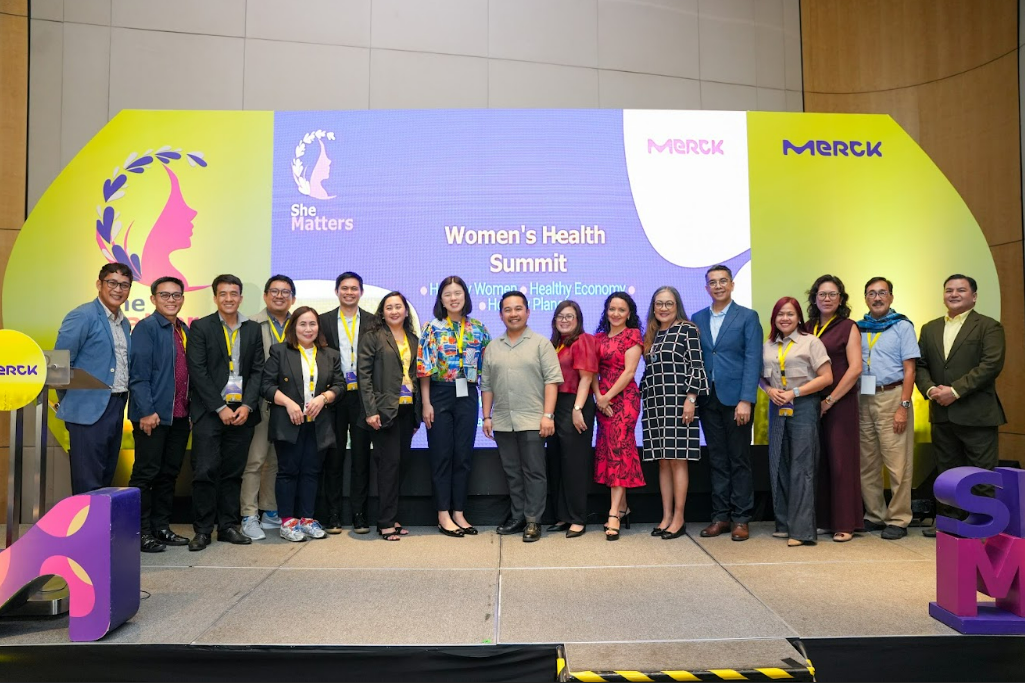
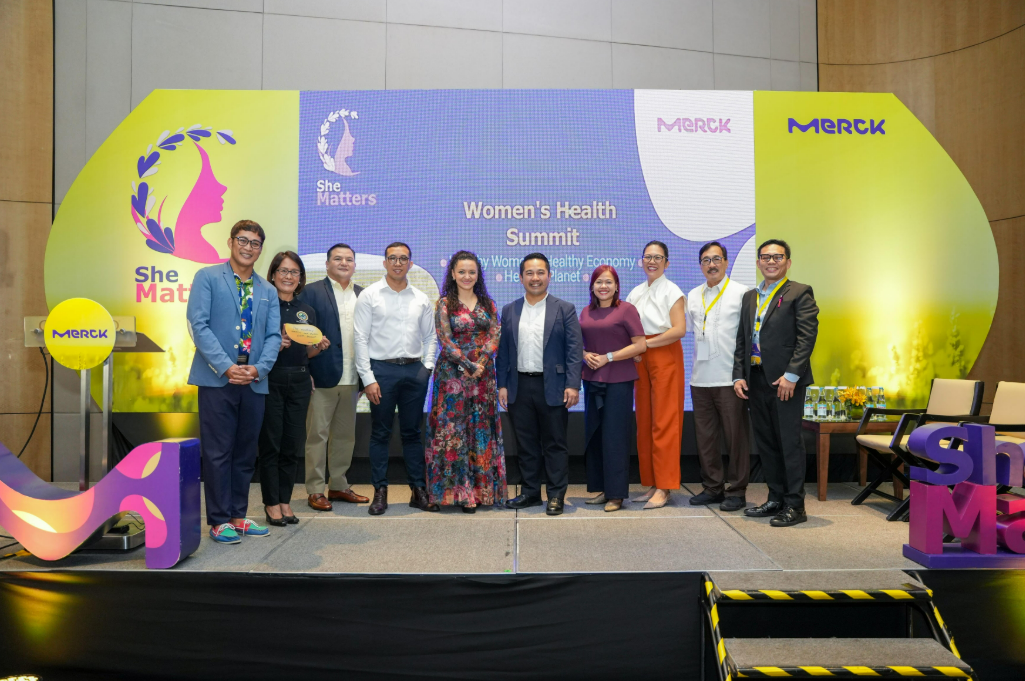
Manila, March 2026 – Merck, a leading science and technology company, hosted its second She Matters: Women’s Health Summit at Conrad Manila, bringing together doctors, healthcare leaders, policymakers, and advocates in a shared declaration and call-to-action to improve women’s health across every stage of life and planetary health.
Anchored on the theme “Healthy Women, Healthy Economy, Healthy Planet”, the summit underscored how improving women’s health has ripple effects far beyond individual wellbeing—strengthening families, boosting productivity, and helping societies thrive.
“Today, we gather not just to discuss health but, more importantly, women’s health—She Matters. Her health matters, her voice matters, her future matters. And when she thrives, the world thrives with her,” said Martha Paiz, Managing Director and General Manager of Merck Inc.
Paiz emphasized that the summit reflects Merck’s commitment to advancing women’s health through stronger collaboration among healthcare professionals, institutions, and communities.
Cardiometabolic Health: A Growing Concern for Women
One of the summit’s key discussions centered on cardiometabolic health covering hypertension, diabetes, polycystic ovary syndrome (PCOS), and other metabolic conditions that are increasingly affecting women at younger ages.
Experts emphasized that these diseases often go undetected because women may present subtle or atypical symptoms, delaying diagnosis and treatment until serious complications such as heart attack, stroke, or heart failure occur.
By raising awareness and encouraging early screening and treatment, healthcare leaders hope to prevent these conditions from progressing and improve long-term health outcomes for women.
Healthy Women, Healthy Economy
The summit also highlighted the strong relationship between women’s health and economic development.
“When women are healthy, they can participate fully in society as professionals, caregivers, leaders, and innovators. Investing in women’s health is not only a healthcare priority but also a powerful economic strategy that strengthens communities and economies,” said Dr. Beverly Lorraine Ho, Chief Health Officer of Ayala Healthcare Holdings, Inc.
Thyroid Health: Small Gland, Big Impact
Another major focus of the summit was thyroid health, which disproportionately affects women.
Though small in size, the thyroid gland plays a critical role in regulating metabolism, energy levels, fertility, mood, pregnancy outcomes, and cardiovascular health. Because symptoms such as fatigue, weight changes, menstrual irregularities, or infertility may appear subtle, thyroid disorders often remain undiagnosed.
“Screening for thyroid dysfunction during pregnancy among Filipino women is important because early detection and treatment can protect both the mother and the child. In the Filipino population, strengthening awareness and screening practices can significantly improve maternal and child health outcomes,” said Dr. Nemencio Nicodemus Jr., President of the Philippine College of Physicians and Professor at the University of the Philippines College of Medicine.
Beyond clinical care, experts also emphasized the need to recognize thyroid disorders as part of the country’s broader noncommunicable disease (NCD) burden.
“Thyroid disorders affect millions of people worldwide, yet they remain under-recognized in many national health agendas. Recognizing thyroid disease as part of the NCD framework can help expand screening, improve treatment access, and elevate public awareness,” said Dr. Jeremy Robles, Director of the International Society of Endocrinology and Past President of the Philippine Thyroid Association.
Plastics, EDCs, and the Future of Women’s Health
The summit also explored how environmental exposures including microplastics and endocrine-disrupting chemicals (EDCs) may influence hormonal health.
These substances are increasingly found in food, water, and air and may interfere with the body’s hormonal signaling systems, potentially affecting fertility, metabolic health, and thyroid function.
“Planetary health reminds us that the health of people and the health of the planet are deeply interconnected. Climate change, pollution, and environmental exposures are shaping the diseases we see today. Protecting the environment is therefore essential to protecting human health,” said Dr. Renzo R. Guinto, Associate Professor and Lead of the Planetary Health Programme at the SingHealth Duke-NUS Global Health Institute, National University of Singapore.
Healthy Women, Healthy Planet
The connection between environmental sustainability and women’s health was further emphasized by public health leaders.
“Healthy women and a healthy planet go hand in hand. Climate-resilient health systems must place women at the center because protecting their health strengthens families, communities, and future generations,” said Dr. Ronald Law, inaugural Director of the Health and Climate Change Office at the Philippine Department of Health.
A Platform for Advocacy and Collaboration
Ultimately, Merck’s She Matters: Women’s Health Summit aimed to spark greater awareness, stronger collaboration, and concrete action to address women’s health challenges. The summit reinforced that women’s health must be prioritized not only in hospitals but also in workplaces, communities, and national policy discussions. More than a scientific gathering, the summit served as a platform for advocacy bridging medicine, policy, and planetary stewardship.
All Merck Press Releases are distributed by e-mail.
About Merck
Merck, a leading science and technology company, operates across life science, healthcare and electronics. More than 62,000 employees work to make a positive difference to millions of people’s lives every day by creating more joyful and sustainable ways to live. From providing products and services that accelerate drug development and manufacturing as well as discovering unique ways to treat the most challenging diseases to enabling the intelligence of devices – the company is everywhere.
Scientific exploration and responsible entrepreneurship have been key to Merck’s technological and scientific advances. This is how Merck has thrived since its founding in 1668. The founding family remains the majority owner of the publicly listed company. Merck holds the global rights to the Merck name and brand. The only exceptions are the United States and Canada, where the business sectors of Merck operate as MilliporeSigma in life science, EMD Serono in healthcare, and EMD Electronics in electronics.